Cyber Security Risk Management
Mitigate risk and ensure compliance against relevant standards and guidelines by establishing a comprehensive risk management program.
Our service provides the people, expertise, and resources necessary to implement a risk management strategy that mitigates risk without disrupting your operations.
The Importance of Risk Management
Most organisations realise the importance of cyber security risk management but often discover the task is more complex and time-consuming than first anticipated.
Interconnected Systems Larger organisations with extensive, interconnected systems find it harder to identify risks and how to mitigate them without impacting business operations.
Understanding Risk Ensuring a fully integrated risk management function requires a clear understanding of interactions and dependencies across the business and their potential impacts.
Resourcing Challenges In-house teams are often tasked with too many priorities to fully dedicate themselves to risk management, leaving little resource for this essential activity.

What to Expect from a Risk Management Service by Bridewell
Our consultants work closely with our clients to ensure their risk management strategy reflects their risk appetite, integrates with existing processes, and supports their wider business goals
Certified Risk Specialists
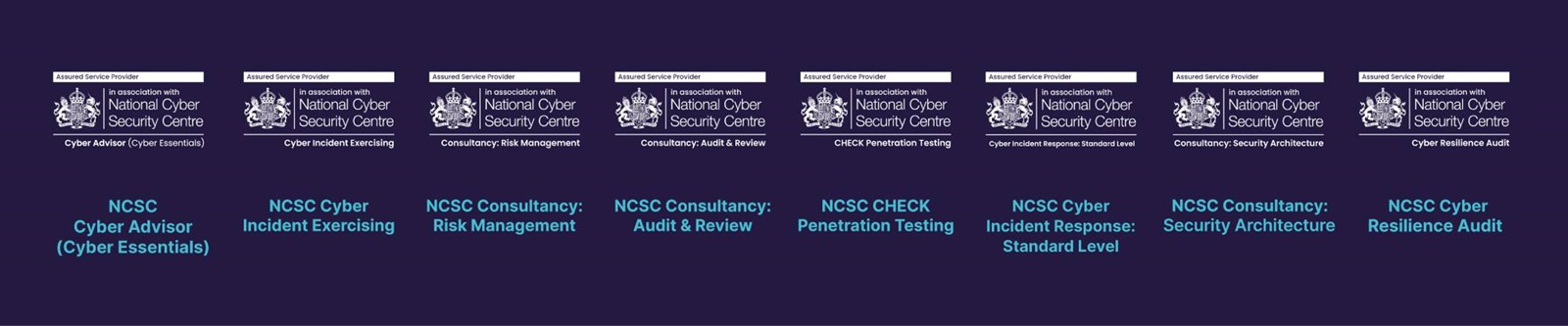
Our consultants have Certified Cyber Professional (CCP) certifications and NCSC Risk specialisms.
A Partner with Leading Industry Bodies
Our consultants work closely with the NCSC and other industry bodies to help shape national programmes and the future of the cyber security industry.
Experience Delivering Services at Scale
We have experience delivering risk management for some of the world’s largest CNI organisations across critical sectors.
Proven Methodologies and Expertise
Our consultants are established leaders in cyber security risk, audit, and supplier assurance, with certifications and experience in advising on NIST, CMMC, ISO 27001, NCSC CAF, OWASP and PCI DSS.
A Tailored Approach
We take a tailored approach to risk management that reflects the unique risks inherent to your organisation’s processes, sector, and risk appetite.
Why is it worth taking on a
Cyber Security Risk Management Service?

Simplified and Cost-Effective Risk Reduction
Risk Mitigation Having a comprehensive view of risk across the organisation enables you to easily apply pragmatic and cost-effective risk reduction strategies.

Certification and Accreditation Requirements
Effective risk management to meet the quality and standards that auditors and accreditors require.

Easily Adopt New Standards and Legislation
Seamlessly align your cyber security programme with new standards, legislation, and business strategies.

Adapt to Changing Risk Levels
Manage the consequences of changing risk levels and develop appropriate continuity plans.
Start your Risk Management Process
Speak with one of our risk management experts to see how we can support your organisation in reducing risk and meeting regulatory demands.

How our Risk Management service works

Our risk management service encompasses all types of risk from security standards and policy, security controls information, security management system, to physical security.
- Step one: Our consultants perform an initial high-level assessment to identify potential risks within your organisation and where they fall short of industry frameworks or proprietary policies and standards.
- Step two: Depending on findings from the initial assessment, our consultants may advise whether any of your organisation’s third-party providers need a more in-depth, on-site visit and review.
- Step three: Having conducted a complete assessment, we then outline and implement an risk management process that addresses any identified risks or vulnerabilities to ensure they are mitigated and compliant.
- Step four: If required, our consultants can be utilised on an ongoing basis to augment your team and ensure this risk management process is adhered to on a continuous basis.


Manchester Airport Group Revolutionises Its Level of Visibility and Protection With SOC Transformation
Finding the Right Partner
Setting up the outsourced SOC had previously been a gruelling project and the thought of taking on another project of this scale was daunting for MAG, especially in terms of the time it would take. The company recognised it needed support and sought advice from peers across the UK aviation sector. Following conversations, Tony Johnson, Head of Cyber Security Operations at MAG, was invited to a conference at a leading UK airport that had undergone a similar transformation and migration. It was here that he learned about the airport’s own journey building a more modern, agile outsourced SOC with Bridewell as its security partner. The peer airport had moved away from a fully outsourced SOC and worked with Bridewell to deploy a new SOC technology stack which is a blend of Microsoft Sentinel and Microsoft Defender XDR. Johnson was impressed by how much was done in such a short amount of time, including onboarding new services. “The team spoke highly of Bridewell,” said Johnson. “Bridewell represented themselves very well when we met them there. We had a really productive conversation and could have easily mistaken them for our peers own in-house security team as they had so much knowledge of the business and its infrastructure.”
Getting the Project off the Ground
The progress that had been made at the peer airport and the strong relationship between the airport operator and Bridewell put Johnson’s fears to rest concerning the scale of the MAG project. Using the model Bridewell had developed with the Microsoft Defender XDR and Microsoft Azure Sentinel stacks, Johnson got to work on the business case for the new SOC.
He engaged Microsoft to develop a pilot SOC solution, funded by Microsoft, however, they too stressed the importance of having the right cyber security partner involved. Johnson already had Bridewell in mind.
“We had the technical capabilities to do this on our own, but we wanted to work with a company that had been there and done that. We knew that Bridewell had the relevant experience in aviation as well as ASSURE accreditation so could avoid the pitfalls and complications which can arise in this sector,” said Johnson.
Because of the previous experience outsourcing their SOC, MAG wanted to change its delivery model from a fully outsourced setup to a hybrid approach that would enable more autonomy over its protection. It wanted to keep some capabilities in-house in order to benefit from the understanding of the business and context the in-house team brings, while leveraging Bridewell’s expertise to design, implement and operate its security infrastructure, as well as train internal teams.
A two-tiered solution was agreed, keeping some security operations in-house while Bridewell ran the company’s 24/7 monitoring facilities. This enabled MAG to benefit from a state-of-the-art security without having to build their own entire security operation.
Once Bridewell understood MAG’s business objectives, an assessment phase took place in which Bridewell performed a gap analysis, followed by a design phase where it looked at the resources already available within MAG and highlighted any additional resource, technology and processes required to make the transition a success. With a significant percentage of MAG’s staff furloughed due to the pandemic, resource was a challenge. However, Bridewell was able to fill any gaps and keep the project running smoothly and, crucially, on-schedule.
A Resounding Success
Phase two was completed in March 2021 and Bridewell’s SOC analyst and hybrid team has been in place ever since helping the MAG team move forward and providing expert guidance to instil the in-house team with confidence in running the SOC.
Enhanced Visibility and Protection
Thanks to MAG’s partnership with Bridewell and Microsoft, the airport group has seen a major improvement in its security setup across the organisation. The group now has better application security and visibility, including a greater view of its security infrastructure, enabling the team to respond to threats across the kill chain in minutes.
Prior to working with Bridewell, MAG only had 70% visibility of its estate and could only see 5,000 events per second. Since the transition, MAG now has visibility of 80,000 events per second and over 95% of endpoints and servers are visible to the SOC. MAG’s team were also flooded with a lot of unnecessary noise from the incumbent provider which would constantly notify them of potential issues detected. It would be down to the MAG team to investigate the issues which often turned out to be normal behaviour and required no action.
“We’re very confident that we’re delivering a better service internally than the incumbent provider ever could. We can see the outcomes. We can see the incidents that are getting raised and that we’re solving,” said Johnson.
MAG has seen the biggest impact in dealing with phishing attacks. Like many organisations, MAG has experienced a significant increase in phishing attacks over the last 12 months with attackers continually trying new approaches to trick employees into opening malicious links. The previous solution would entail a lengthy manual process that required MAG to contact other internal technical teams to undertake tasks every time a phishing attempt was reported. However, the new SOC automatically spots phishing attempts, checks that nobody in the organisation has clicked the links, and removes threat from inboxes across the organisation.
The organisation had also been considering a SOC assurance audit from a third party to demonstrate the strength of the new solution, but initial conversations with assurance providers revealed this would be costly and time consuming. And with the positive impact of the new Bridewell solution so clear, senior stakeholder within MAG deemed that an assurance audit was not necessary.
Industry
Risk Management FAQs
The length of the engagement varies depending on the scope, current maturity and requirements. Some clients require days of advice and guidance, others prefer to utilise Bridewell for more in depth analysis, or to reduce the demand on their own resources on a temporary or long term basis.
Risk management is an ongoing process and Bridewell share knowledge, best practices and examples with clients to support organisations to mature and continue risk management practices independently.
Ideally an organisation will have an asset inventory, existing risk assessment and risk management processes and a previous risk assessment. We appreciate that organisations operate at different levels of maturity and that not all items might be available or complete.
Allocation of resources internally to support the engagement and risk management process is beneficial, often with communication to the business on the importance of risk management and what is required from staff and teams to support the initiative, along with the organisations reasons for focusing on risk management (e.g to support an ISO 27001 implementation or new business opportunity).
Some of the top cyber security risks include phishing attacks, ransomware, insider threats, advanced persistent threats (APTs) and unpatched software vulnerabilities.
Cyber security focuses on protecting systems, networks and data from cyber threats through measures like firewalls and encryption. Cyber risk management is a strategy within cyber security that involves identifying, assessing and prioritising risks to mitigate potential impacts.
A cyber security risk management plan is a structured approach to identifying, assessing and prioritising cyber security risks. It outlines strategies for mitigating or treating risks that include policies, procedures and controls. The plan also includes monitoring and reviewing approaches to new threats to maintain the ongoing protection of vital information.
To identify a cyber security risk, it’s important to conduct a structured risk assessment that will help identify, analyse and evaluate any potential threats to information centres. Some methods include cataloguing all data and hardware assets, identifying potential vulnerabilities, and determining threat likelihood.
Risk levels in cyber security range from low risk, which may have a minor impact on your organisation, through medium and high impact levels, to critical levels, which represent immediate and catastrophic damage to your organisation. Risk factors are determined by assessing the severity of impact, how easily they’re exploited, how widespread they are, and how easily they can be identified.
Why Us?
Awards
Our team have won numerous industry awards, including 'Cyber Security Company of the Year' at the Cyber Security Awards 2026 and Best Cyber Security Service Provider' at the Cyber Security Awards 2025.
Certifications
Our people and services are highly accredited by leading industry bodies including CREST, the NCSC, and more. Our SOC holds extensive accreditations from CREST (including for CSIR and SOC2) and works closely with our cyber consultancy services.

Partnerships
As a Microsoft Partner, we also hold advanced specialisms in Cloud Security and Threat Protection. We’ve also implemented some of the UK’s largest deployments of the Microsoft Security stack, inc. Sentinel, Defender, Purview and more.