From Military Service to Managed Services – Addressing the Fears of Leaving the Military
For me, that transition started from an infantry background, where my experience was rooted in leadership, decision-making under pressure, and operating in complex and uncertain environments; a far stretch from technical systems or cyber security. Unlike many veterans entering the industry with signals, intelligence, or technical experience, I began this journey with no prior background in cyber or technology.
What quickly became clear was that cyber security was not as unfamiliar as I initially thought. While the terminology and technical concepts were new, the foundations were familiar: managing risk, understanding threats and making decisions with incomplete information.
Joining Bridewell and enrolling in the Academy, on the consultancy pathway, has proven to be crucial in bridging that gap. The experience reinforced an important lesson about transitioning into the cyber security industry; success is rarely about starting from scratch. Instead, it comes from understanding the value of the skills developed through service, adapting your mindset to a new environment, and continuing to refine both technical and professional capabilities.
Mindset for Transition and Understanding Transferable Skills
For many people leaving the British Armed Forces, the biggest challenge in transition is not capability, but perspective. When entering a new industry, such as cyber security, it can be easy to focus on what you don’t know rather than the experience you already bring.
The real mindset shift comes from recognising that transition is not about replicating your military role in a civilian setting. Instead, it involves understanding how the underlying skills developed during service, such as discipline, accountability, teamwork, and structured decision-making, can apply to entirely different problems.
Leadership and Security – Compare and Contrast
Leadership is one of the qualities most commonly associated with military service, but the way leadership manifests in the private sector can look quite different from what many service leavers are used to.
Within the British Armed Forces, leadership is often exercised through clearly defined command structures. Roles, responsibilities, and authority are well understood, and decisions are made with the expectation that actions will be executed quickly and effectively.
In cyber security, leadership tends to operate in a more collaborative and consultative environment. Decisions often require input from technical specialists, risk owners, business stakeholders, and senior leadership teams. Instead of directing outcomes through command, security professionals frequently need to influence decisions, communicate risk clearly, and help organisations understand the consequences of different choices.
Despite these differences, the underlying principles remain familiar. Both environments require individuals who can assess complex situations, communicate clearly, and maintain accountability for outcomes. The ability to remain calm under pressure, interpret incomplete information, and make balanced decisions is just as valuable in cyber security as it is in a military setting.
Full Circle – Polishing Technical Skills (Training and Guidance in the Academy)
While transferable skills form an important foundation, developing technical knowledge is often the stage where many veterans feel they are truly transitioning into the cyber security profession.
Without previous exposure to technology or cyber-related roles, I initially felt as though I was stepping into the unknown. The terminology, frameworks and technical concepts seemed overwhelming at first, particularly when compared with the environments I had been used to operating in during my military service.
Structured training environments can play an important role in bridging that gap. Programmes such as the Bridewell Academy provide a framework that combines learning, mentoring, and practical exposure to real client environments. Rather than focusing purely on theory, the emphasis is on understanding how cyber security works in practice within organisations.
Joining the Bridewell Academy also provided me with another unique opportunity. Building my skills and professional acumen from the ground up was an experience I shared with those around me, but doing so alongside people from very different backgrounds allowed me to learn from perspectives I might not otherwise have encountered. These different perspectives challenged the way I thought, improved my ability to communicate and helped me quickly develop greater confidence, both professionally and personally.
For veterans in particular, there is value in beginning this journey alongside others who have made the same transition. Having people around you who understand the experience of leaving the military, adapting to a new professional environment, and learning an entirely new discipline provides a familiar sense of support and community.
Over time, technical concepts begin to connect with the decision-making, planning, and risk awareness that many veterans already possess. What initially feels like a completely new discipline gradually becomes something that builds on existing strengths.
What the Military Does to Help You Succeed
The British military develops a number of qualities that can provide a strong foundation for success in civilian careers. Many of these attributes are developed gradually over years of service and often become second nature.
Service personnel are accustomed to working in environments where responsibility, teamwork, and accountability are central to success. This experience often translates well into professional environments that require collaboration, problem solving, and clear communication.
The Armed Forces also invest significantly in leadership development. From early in a career, individuals are expected to take responsibility, manage people, and make decisions that affect others. These experiences help build confidence, resilience, and an ability to perform under pressure.
What the Military Doesn’t Do (and How to Overcome It)
Although military service provides many valuable skills, there are aspects of transitioning into the civilian workforce that the Armed Forces cannot fully replicate.
One of the most common challenges for service leavers is translating military experience into terms that civilian employers can easily understand. Roles and responsibilities that are clear within a military structure do not always translate neatly into the language used by private sector organisations.
There is also the broader adjustment to a different professional culture. Decision-making structures, communication styles, and organisational dynamics can feel unfamiliar compared to the clarity and structure often found in military environments.
Overcoming these challenges required me to take a proactive approach. I sought out mentorship, engaged with veteran networks, pursued additional training and focused on building professional connections. These steps helped me bridge the gap between my military experience and the expectations of the civilian industry, while also giving me greater confidence as I established myself in the cyber profession.
Final Words
My transition from military service into cybersecurity has shown me that success beyond the armed forces is not something to fear. Looking back, I can see how the skills developed during my military career remain highly valuable in civilian life.
Through the Bridewell Academy programme, I have found an environment where I can build on my existing experience, develop new capabilities and continue learning every day. My journey has shown me that the transition from service is not about leaving valuable skills behind, but about finding new ways to apply them and continue growing.
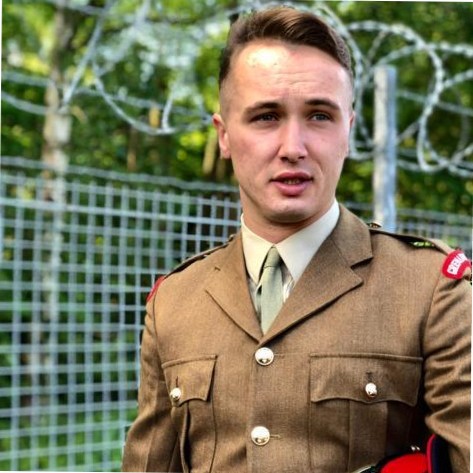
Brice Fanning
Junior Consultant
 Blogs
Blogs
 Blogs
Blogs